The video introduces the Hi-Point HP-15 line of AR-15 pattern firearms, focusing on the 5.56 NATO versions. Two main configurations are shown: a 16-inch rifle and a 10.5-inch pistol. There is also mention of a .300 Blackout version, though the discussion centers on the 5.56 models. The presenter explains that the video will cover technical specifications, then walk through each firearm from muzzle to stock or brace, verifying listed specs such as weight, length, and trigger pull. The goal is to compare the rifle and pistol variants and highlight where they share components and where they differ in configuration and features.
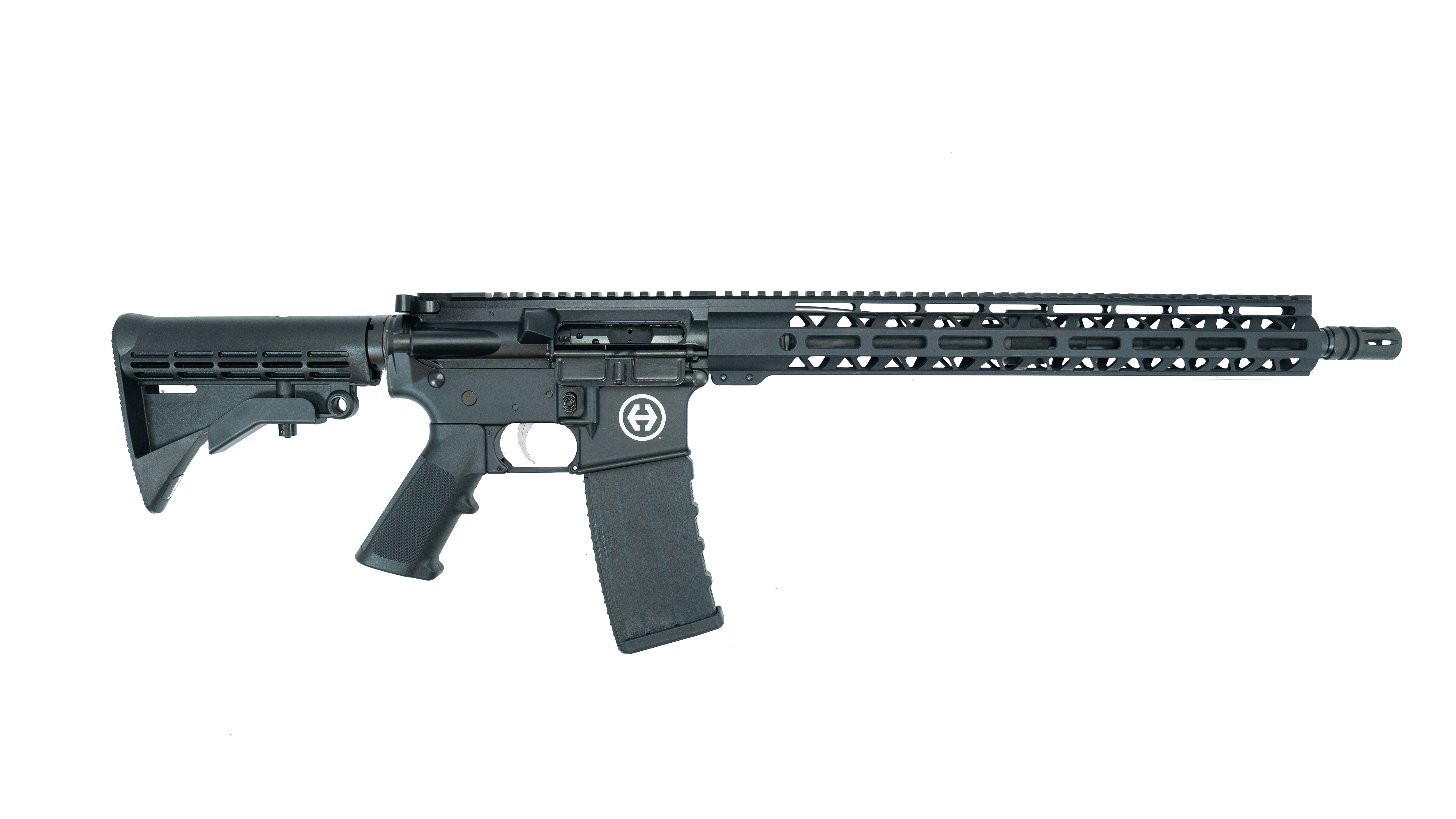
The HP-15 rifle features a 16-inch barrel chambered in 5.56 NATO with a 1:8 twist rate and 1/2x28 thread pitch. It uses a carbine-length gas system and a 4150 chrome vanadium barrel. The rifle is equipped with an A2-style birdcage flash hider that is closed on the bottom to help direct muzzle movement downward. It has a 15-inch M-LOK handguard with a full-length Picatinny rail on top, providing mounting space for optics and accessories. Both upper and lower receivers are 7075-T6 aluminum. The rifle ships with a standard capacity magazine and weighs approximately 6.25 pounds according to the stated specifications.
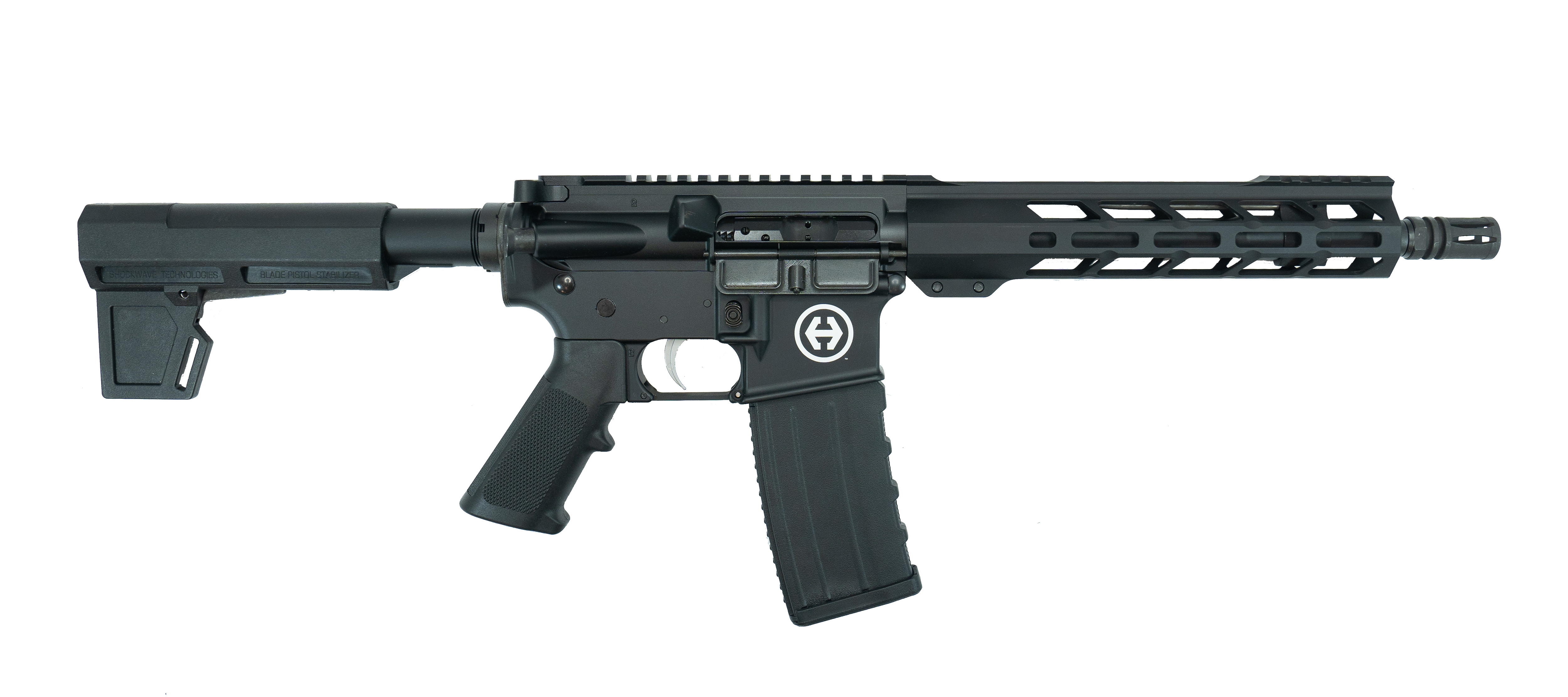
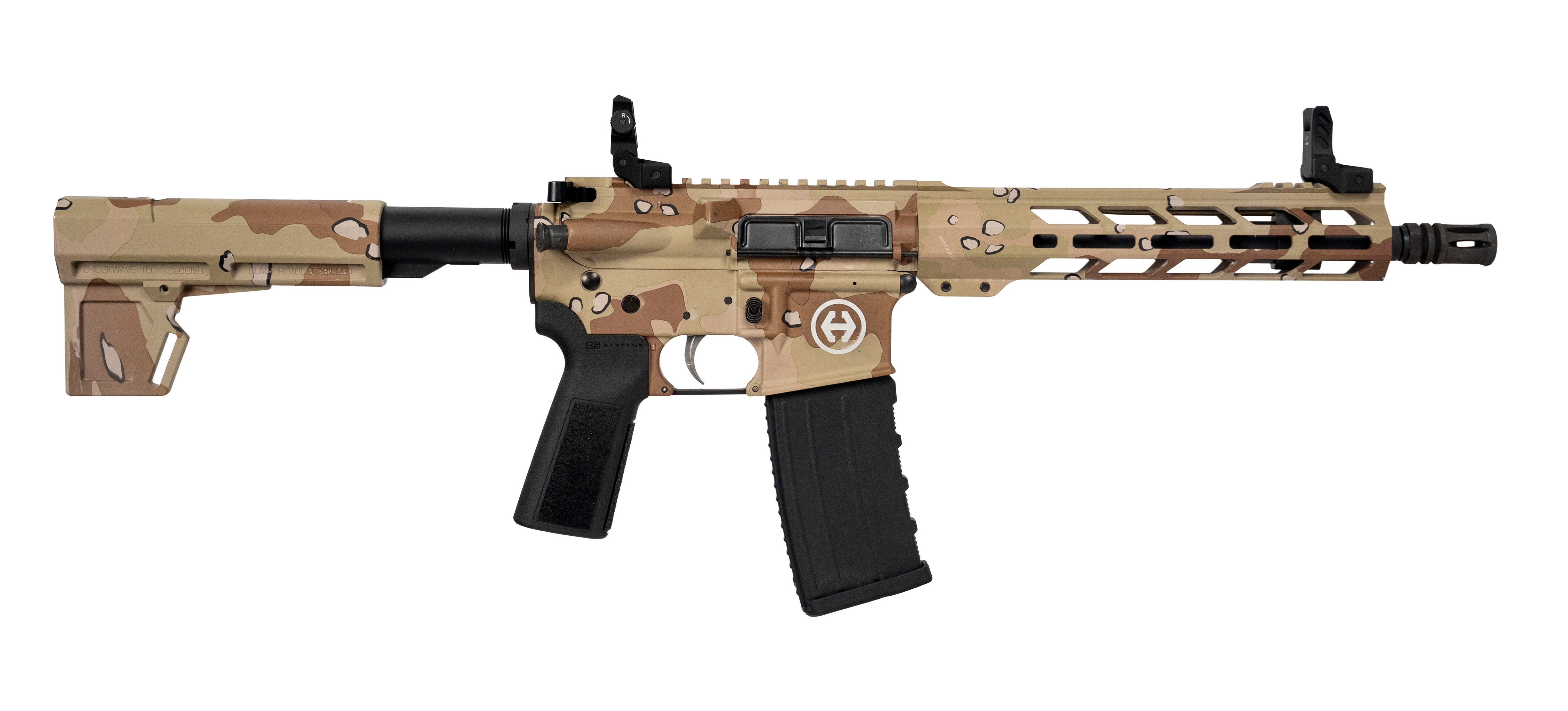
The HP-15 pistol shares many components with the rifle, including 7075-T6 aluminum upper and lower receivers, a 4150 chrome vanadium barrel, and an A2-style flash hider. The pistol’s barrel is 10.5 inches with a 1:7 twist rate, differing from the rifle’s 1:8 twist. Its handguard is 9.5 inches long and has Picatinny rail on top along with M-LOK slots, arranged differently than on the rifle. One notable difference is that the rifle includes a QD sling point on the handguard, while the pistol does not. The pistol configuration is designed with a brace at the rear instead of a traditional stock, which changes its overall length and handling characteristics compared to the rifle.
Both the HP-15 rifle and pistol use familiar AR-15 style controls. Each has a mil-spec charging handle, a standard bolt release on the left side, and a mil-spec magazine release. The lower receiver prominently displays the Hi-Point logo in white, with additional engraved information and serial number markings on the left side. Both firearms are equipped with an A2 grip, which has a pronounced finger groove and relatively aggressive texturing on the sides, with slightly less texture on the front and back. The trigger is a single-stage design on both models. When tested by feel, the trigger shows virtually no take-up before the break and a short reset, giving a consistent and solid pull on both the rifle and pistol variants.
The primary rear-end difference between the two HP-15 configurations is the use of a brace on the pistol and a traditional adjustable stock on the rifle. The rifle’s stock is a mil-spec style adjustable unit with multiple positions and includes both a standard sling attachment point and a QD sling mount, offering several sling setup options. The pistol uses a brace with a fin-style design. The brace is primarily polymer, but there is a small metal component underneath that acts as the adjustment mechanism; pressing it allows the brace to slide and lock into different positions. Both the stock and brace are adjustable, but the rifle provides more integrated sling mounting choices, which may influence how each firearm is carried or stored.
Trigger pull is measured on both the HP-15 pistol and rifle using a trigger gauge. For the pistol, two pulls are recorded. The first reading is 6.42 pounds and the second is 6.0 pounds, placing the pistol’s trigger pull at roughly 6 pounds. The rifle is then tested in the same way. The first rifle reading is 6.2 pounds, and the second is 7.25 pounds, with the higher value attributed to a slightly longer pull on that attempt. Overall, both triggers average around 6 pounds, aligning with expectations for mil-spec style AR-15 triggers. The measurements confirm that the rifle and pistol triggers feel and perform similarly in terms of pull weight.
The overall lengths of the HP-15 rifle and pistol are measured to verify practical dimensions for storage and transport. With the rifle’s stock fully collapsed, the overall length is approximately 32 inches. With the stock fully extended, the rifle measures about 35.5 inches from muzzle to butt. The pistol is then measured with its brace adjusted. In its shorter configuration, it measures about 26 inches overall. With the brace extended, the pistol’s length is roughly 29.5 inches. These measurements provide a clear sense of how compact each configuration can be, which may be relevant for fitting into specific bags, cases, or storage spaces.
A scale is used to compare actual weights against the listed specifications. The HP-15 pistol is stated to weigh 4.25 pounds, but on the scale it reads approximately 5.31 pounds with a magazine inserted, indicating a noticeable difference from the published figure. The presenter suggests this may be due to the configuration used when the original weight was recorded, such as measuring without the brace. The rifle is listed at 6.25 pounds and measures about 6.41 pounds on the scale, or 6.14 pounds without a magazine, which is closer to the stated spec. The video concludes by summarizing that both the HP-15 rifle and pistol offer similar triggers and controls with differences in length, weight, and sling options, and encourages viewers who own these models to share their experiences in reviews.





















 Loading...