Host Kai introduces retired SEAL Jim Foreman to discuss the best combat rifle he has used. Jim notes that this rifle is a close replica of his actual deployment gun. He briefly outlines his background: 27 years in the SEAL teams, retirement about five and a half years ago, and current work with Ferro Concepts, ZEV or Zena Firearms as a consultant, and as part owner of Active Crisis Consulting. Kai mentions previous training content filmed with Jim at Active Crisis and frames this segment as a focused breakdown of Jim’s preferred combat rifle setup and why he trusted it operationally.
Jim identifies the HK416 as his preferred combat rifle, emphasizing its reliability and durability. He explains that the HK416 uses a gas piston system, which he considers very strong and dependable, especially in maritime environments and wet conditions. The rifle shown on the table is an HK MR556A4, set up to closely mirror his issued HK416. Kai notes that this MR556A4 configuration was recently shown at SHOT Show and acknowledges contacts at HK USA and HK Germany. Jim highlights that the HK416 is easy to clean, simple to maintain, and was adopted by his command to address reliability issues they had experienced with earlier rifles in harsh conditions.
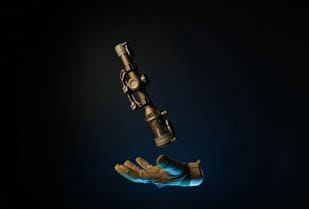
Jim describes his optic configuration as a reconnaissance-focused setup. On his 10.5-inch HK416, he ran a 2.5–10x Nightforce scope, which allowed him to use the rifle’s optic instead of carrying separate 10x binoculars. The rifle on the table wears an EOTech Vudu 1–10x, but he notes the concept is similar. For close-range daytime work, he mounted a red dot at the 12 o’clock position on top of the scope. That red dot covered roughly 0–80 yards for precise head shots and rapid engagements. At night, he relied on a laser for aiming. He explains that using only the magnified optic at low power in close quarters was slow due to eye relief and target acquisition, so the top-mounted red dot provided a faster, more consistent presentation than offset 45-degree mounts.
Jim’s issued HK416 had a 10.5-inch barrel, similar to the 11–12 inch barrel on the MR556A4 shown. He states that with a 10.5-inch gun, hits at 300 yards are very achievable, and head shots at 200 yards are realistic, making it a capable system despite the shorter barrel. He used the magnified optic for engaging key targets at distance when required. Jim explains that the HK416 replaced their M4s and older battle rifles as a command-level purchase. The decision was driven by the need for a rifle that would run more reliably in dust, sand, and other harsh environments. In his experience, the HK416 provided a noticeable improvement in reliability over the M4 platform under those conditions.
Jim discusses how the HK416 performed during operations involving water and sandy environments. He mentions conducting high-altitude free-fall jumps lasting several minutes with the rifle, often into or over water. Ideally, the rifle was protected in a bag during jumps, but for amphibious insertions over the beach, they would tape and lube the rifle, then swim it in. Once on land, the weapon was quickly accessible and ran without issues. He stresses that taping key openings was done more to mitigate sand intrusion than water. Sand, dirt, and dust are major causes of malfunctions, and he notes that AR platforms are particularly susceptible to sand. Properly taped and maintained, the HK416 continued to function reliably in these conditions.
Jim confirms he used a vertical foregrip along with a laser on the HK416. The foregrip improved control and supported their preferred close-quarters technique of entering rooms from a high-ready position. He addresses criticism about how he holds the “broom handle” foregrip, explaining that his method is based on training and experience with role players in protective suits attempting to grab or fight for the weapon. Approaching low makes it easier for an opponent to control the rifle, whereas coming in high allows immediate muzzle strikes and better retention. He emphasizes that different shooters use different grips, but his approach was validated through force-on-force training focused on weapon retention and effective striking in confined spaces.
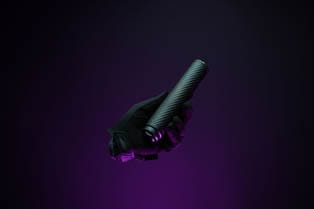
On the HK416, Jim used an AAC M4-2000 suppressor, similar to the one shown in the video. He describes it as an excellent match for that weapon system. Earlier in his career, he used a Knight’s Armament suppressor, recognizable by its “corn cob” appearance. That earlier Knight’s model was slightly shorter and, in his view, worked very well with the rifles they had at the time. He notes that the shorter length and overall balance of that suppressor were advantages. The discussion focuses on how these suppressors paired with the HK416 and earlier platforms, rather than on sound reduction metrics, highlighting practical fit, length, and compatibility with the rifle’s intended role.
Jim says he did not have strong preferences on stocks beyond issued options, but he valued stocks with integrated battery compartments, such as certain LBT designs. Extra batteries were important for long-duration missions of 10–12 hours or more, especially if batteries had not been recently changed. He places more emphasis on sling choice, preferring a two-point sling over a single-point. He praises the Ferro Concepts Slingster for its smooth, easily adjustable slider and durable metal hardware, noting that excess webbing can be neatly tucked into a built-in pocket rather than taped. He recently installed another Slingster on his Rattler. Jim and Kai also touch on weight distribution, agreeing that if weight must be added, it is better to keep it closer to the rear of the rifle rather than adding more mass to the front, which can cause fatigue during prolonged security holds.










 Loading...