The video opens with a detailed look at why the Sig Rattler LT was such a meaningful improvement over the original Rattler. The LT’s slightly longer barrel is highlighted for better 300 Blackout powder burn, more usable hand space, and improved overall shootability while preserving the compact form factor. Ambidextrous controls are emphasized as a major ergonomic upgrade. The hosts then move into LV/Elvall-inspired Rattler variants, including the newer LTA model with full ambi controls and a more rigid, screw-secured handguard that better supports lasers and accessories. They explain how the updated handguard can partially shroud a roughly 1.75-inch suppressor and offers improved heat mitigation, while also warning that fully enclosing a suppressor under the rail can create significant heat buildup. A return to a Gen One style grip is noted for its familiar feel. This early section sets the stage for how each builder approaches the Rattler platform as a compact, optimized 300 Blackout system rather than just a short AR-style gun.
The focus shifts to Ryan’s personal Sig Rattler build, breaking down his specific component choices. He runs a Griffin Armament Explorr 300 suppressor on a Griffin Plan A muzzle device, balancing sound performance with the compact 300 Blackout aesthetic. Instead of the Elvall rail, he chooses a Sig SD M-LOK rail for better compatibility and accessory mounting, then adds Slate Black Industries rail covers for heat protection and grip. A True North Concepts Pew View hand stop provides indexing without adding bulk. For illumination, he mounts a Sig compact light 300 rated at 1350 lumens, giving the short platform a serious white-light capability. Up top, the upper is configured with a Unity mount and an EOTech 3-2 optic featuring a dual-dot reticle, allowing distinct holds. A Radian Raptor charging handle is used for improved manipulation, and older Sig iron sights are retained primarily as backups and for height reference. This build showcases a balance of performance, ergonomics, and the classic Rattler look.
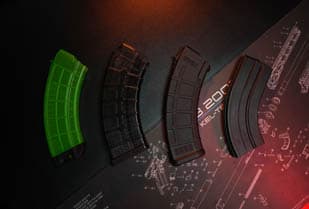
Another Rattler-style build is introduced, again using a Radian Raptor charging handle and old-school Sig HK-style iron sights, which mainly serve as a visual reference for optic height rather than primary aiming tools. The grip is a German Arms Co unit with an angled cutoff, chosen to mimic the original Rattler feel while improving comfort. The rifle uses a Sig collapsible, folding stock based on the AR-18 pattern, eliminating the need for a buffer tube and keeping the package extremely compact. An Edgar Sherman sling is attached, reflecting a preference for minimalist, functional slings on short 300 Blackout guns. Suppressor selection is discussed, with a clear preference for shorter cans to preserve the Rattler’s compact identity and differentiate it from longer 5.56 setups. Ammunition performance is examined, particularly Hornady 208-grain subsonic loads, likely Hornady Black, which run very quiet and reliably in this configuration. In contrast, 190-grain subsonic loads have shown recurring cycling issues, possibly tied to the platform’s origins around 7.62x35 rather than standardized 300 Blackout. A magazine loaded with Winchester 300 Blackout is shown to illustrate how some cartridges do not fully fill the mag body like 5.56, affecting stack and presentation.
Attention turns to another Rattler LT build featuring the HD A3 stock, developed in collaboration with Haga. This stock mimics the iconic ACR design but improves durability with metal rails and integrates an adjustable cheek riser. The riser offers better cheek weld but can interfere with the charging handle, so it is often run fully down. A Geissele charging handle is selected for its gas mitigation features, particularly useful with gassier suppressors, though the AR-18-style system already vents better than a traditional AR-15. The lower receiver is upgraded with a Timney trigger for a cleaner break, and a Badger Ordnance safety selector replaces the chunkier factory Rattler safety for more precise manipulation. A Magpul K2 Plus grip is used for its more vertical angle and rubber overmold, and a flared magwell is added to speed reloads in low light or under stress. The same M-LOK suppressor-ready rail seen on other builds provides extra hand space and mounting real estate. This rifle is configured as a home-defense gun with a straightforward weapon light and an Edgar Sherman Design sling attached farther back on the rail to keep the front clear for the support hand.
The hosts explain why they prefer setting up farther back on the Rattler, noting that a sling mounted too far forward can interfere with reloads and magazine manipulation on such a short platform. They then highlight the Jay Bennett Designs gas regulator, which offers multiple on-the-fly positions and interchangeable screws, allowing very fine control over gas settings for different suppressors and ammo. The regulator features DLC coating and improved texturing, making it easier to adjust and more durable, and it significantly reduces gas to the face when paired with the right charging handle. Discussion moves to the Dead Air Nomax suppressor, configured with a 30-caliber end cap on a 300 Blackout Rattler. The Nomax is praised for sound performance and its conceptual similarity to the original Black Mamba idea, representing ongoing innovation in suppressor design focused on gas mitigation and flash reduction. Finally, the EOTech XPS 300 optic, likely the XPS2-300, is showcased. It includes built-in holds for both subsonic and supersonic 300 Blackout, making it particularly well-suited to the Rattler. This build omits QD mounts and iron sights, prioritizing a clean, functional, and visually cohesive setup.
In the closing section, the builders reflect on how they customized their Sig Rattler 300 Blackout setups to balance performance, aesthetics, and weight. Handguards are added not only for function but also to achieve a specific visual profile, particularly an EOTech-equipped, modern PDW look. Despite the accessories, overall weight is kept around 8.75 pounds, which they consider acceptable for a suppressed, fully outfitted 300 Blackout. Weapon lights are emphasized as essential on the Rattler; while the light does not need to be pushed fully forward to minimize suppressor shadow, it must be positioned so that the beam remains practical and unobstructed in realistic use. The hosts invite feedback on the Rattler platform and ask viewers whether there is a better 300 Blackout option, specifically mentioning the Honey Badger as a popular alternative. They note that a Honey Badger Gen 3 is on the way and tease a direct comparison between it and the Sig Rattler in a future video. The segment ends with a brief, YouTube-compliant reference to an unnamed item viewers will no longer be able to possess after that day, adding a time-sensitive note to the discussion.












 Loading...