The video opens by framing the H&K MP5 as the benchmark for roller-delayed 9mm platforms. The hosts explain why the MP5’s classic roller-delayed blowback system has earned a reputation for smooth operation and reliability since the 1960s. Against this backdrop, they introduce the Springfield Armory Kuna 9mm pistol-caliber carbine as a modern, semi-locked, roller-delayed design with lineage similar to the Grand Power Stribog variants. The discussion emphasizes that both guns share the roller-delayed concept but execute it with different eras of engineering and ergonomics. The MP5 is presented as the proven, iconic standard, while the Kuna is positioned as a contemporary interpretation that aims to deliver similar reliability in a more compact, modular, and feature-rich package tailored to current shooter expectations.
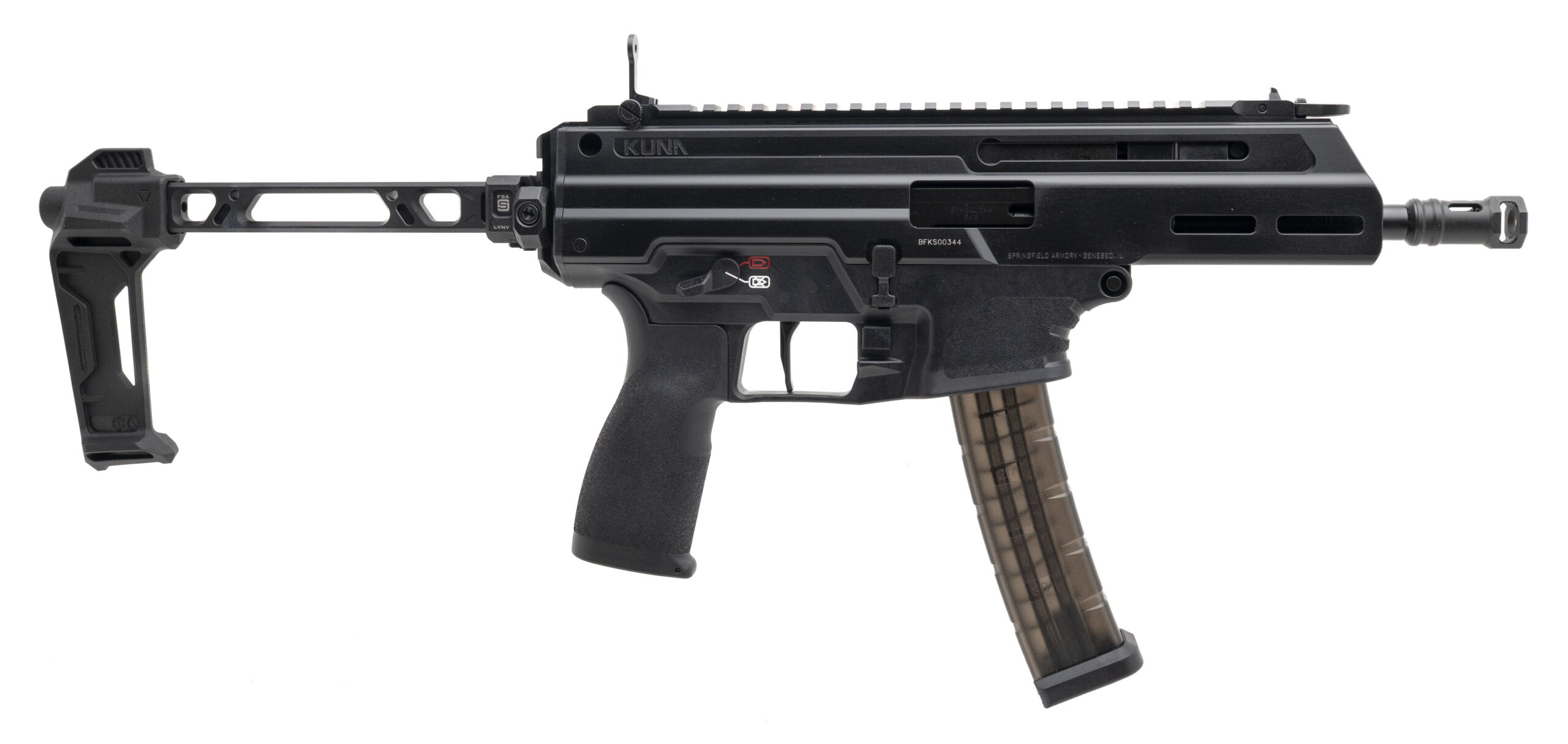
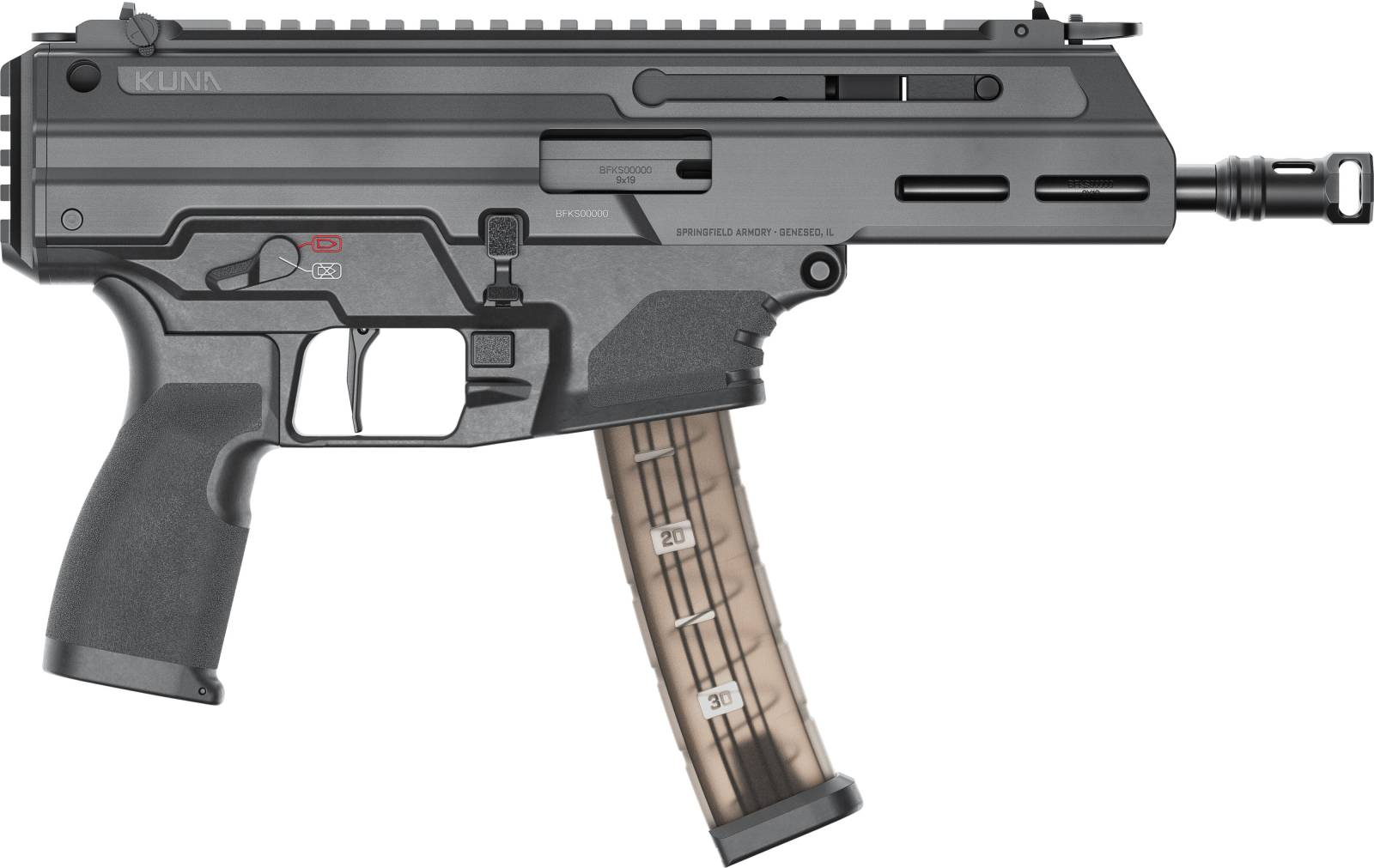
Focus shifts to the Springfield Armory Kuna’s construction and operating system. The hosts highlight its monolithic aluminum upper, which integrates the top rail and handguard into a single rigid unit. This design provides a solid mounting surface for optics and accessories while keeping weight manageable. They describe the Kuna’s roller-delayed, semi-locked action as a modern take on the concept, intended to soften recoil impulse and improve controllability in a compact 9mm platform. Hybrid flip-up sights are included from the factory, giving shooters usable irons that can fold out of the way for red dots. The video notes that the Kuna’s design draws inspiration from contemporary PCCs like the Grand Power Stribog, blending that lineage with Springfield’s branding and updated external styling to create a fresh entry in the roller-delayed 9mm category.
The comparison moves into controls and ergonomics, where the Kuna’s modern layout is contrasted with the MP5’s older design. The Kuna features fully ambidextrous controls, including safety selector and magazine release, catering to both right- and left-handed shooters. A flat-face trigger is called out as a contemporary touch aimed at providing a consistent, crisp pull. The Strike Industries folding brace on the Kuna is discussed as a compact, lightweight solution that folds to the side for storage and transport, differing from the MP5’s traditional stock options. The hosts note that the MP5’s ergonomics reflect its 1960s origins, with less intuitive controls and a heavier, more old-school feel. Overall, they suggest that in terms of pure handling and user interface, the Kuna offers a more modern, shooter-friendly experience than the classic MP5 layout.
Attention turns to barrel specifications and magazine design. The Springfield Kuna is described as having a 6-inch cold hammer forged barrel, optimized for compactness while still delivering reliable 9mm performance. It uses common 1/2x28 muzzle threads, making it straightforward to attach compensators, flash hiders, or suppressors. The MP5, by contrast, runs an approximately 8-inch barrel, giving it a slightly longer sight radius and velocity advantage. It typically features both tri-lug and 1/2x28 threading, reflecting its long history of suppressor use and accessory support. The hosts also mention that the Kuna relies on proprietary magazines, supplied with two 30-round mags from the factory, while the MP5 uses its own well-established magazine pattern. These differences underscore how the Kuna prioritizes compactness and modern accessory compatibility, whereas the MP5 carries forward its traditional dimensions and legacy support.
The video transitions from tabletop comparison to live-fire testing. The hosts outline their plan to run timed drills at 25 yards to evaluate how the Springfield Kuna and H&K MP5 perform under similar conditions. They mention a 75-yard target as a reference point, indicating interest in how these pistol-caliber carbines behave beyond typical handgun distances. The drills are structured to highlight controllability, split times, and practical accuracy rather than pure benchrest precision. By standardizing distance and basic course of fire, the presenters aim to reveal how each platform’s operating system, ergonomics, and sighting setup translate into real-world shooting performance. This setup segment establishes that both guns will be pushed through comparable scenarios, allowing viewers to see strengths and weaknesses emerge on the clock and on steel or paper.
With the drills defined, the hosts begin shooting the Springfield Armory Kuna at 25 yards. They comment on the gun’s controllability, noting how the roller-delayed, semi-locked system and compact 6-inch barrel combine to produce a manageable recoil impulse. The modern ergonomics, including the flat-face trigger and ambidextrous controls, are highlighted as contributing to quick follow-up shots and efficient manipulation during timed strings. The Strike Industries folding brace provides a stable cheek weld and shoulder contact, helping maintain sight alignment through rapid fire. Hybrid flip-up sights or any mounted optic allow for clear target acquisition at the chosen distance. Initial impressions suggest that the Kuna feels like a contemporary PCC optimized for speed and comfort, with its design choices translating into confidence on the timer and consistent hits at 25 yards.
The focus shifts to the H&K MP5 on the same 25-yard drills. The hosts emphasize the MP5’s famously smooth operation, a hallmark of its classic roller-delayed blowback system. Despite its older ergonomics and heavier, more traditional build, the MP5 delivers a soft, predictable recoil impulse that many shooters still regard as the standard in 9mm PCCs. The longer 8-inch barrel and established stock configurations contribute to stability and sight tracking during rapid fire. As they compare times and impressions, the presenters note that while the MP5 may not offer the same modern control layout as the Kuna, it remains exceptionally shootable. The side-by-side testing underscores how the MP5’s decades-old design still competes strongly in recoil management and reliability, even when measured against a newer, more ergonomic platform.
After running both guns, the hosts step back to offer overall impressions. They acknowledge that ergonomically, the Springfield Kuna comes out ahead, with its ambidextrous controls, flat-face trigger, folding brace, and compact monolithic upper making it easier to handle and configure. However, when evaluating operating system confidence, long-term reliability, and emotional appeal, they still give the edge to the H&K MP5. The MP5’s decades of service, proven roller-delayed system, and iconic status create a strong sense of trust and nostalgia that the newer Kuna cannot yet match. The discussion frames the choice as a trade-off between modern ergonomics and a legendary, battle-tested platform. Viewers are left with the sense that the Kuna is an impressive, contemporary PCC, but the MP5 remains the sentimental and reliability benchmark in the roller-delayed 9mm world.
As the technical comparison winds down, the conversation turns to the Springfield Kuna’s appearance and what other firearms it resembles. The hosts mention that representatives from Grand Power have commented that the gun looks like a Strive or Stribog-style platform, reflecting its design lineage. Others in the community have compared its silhouette and layout to compact PDWs such as the MP7, noting shared visual cues like the short barrel, top rail, and compact receiver. This segment invites viewers to think beyond specifications and consider how the Kuna fits into the broader visual landscape of modern pistol-caliber carbines and personal defense weapons. The hosts use these comparisons to spark discussion, setting up a more focused debate on whether the Kuna most closely resembles another popular PCC: the CZ Scorpion Evo.
The closing portion of the video centers on repeated comparisons between the Springfield Kuna and the CZ Scorpion Evo. The host notes that Brandon and others strongly feel the Kuna resembles the Evo, especially in overall profile and PCC styling. The CZ Scorpion is mentioned by name multiple times as the primary visual reference point. The speaker repeatedly asks viewers what they think the Kuna looks like and encourages them to share their opinions in the comments section, emphasizing audience engagement. This outro segment functions as both a wrap-up and a community prompt, inviting feedback on whether the Kuna appears closer to a Stribog, Scorpion Evo, or another platform entirely. The video ends with brief sign-off remarks and a suggestion to check additional content or links associated with the channel.





















 Loading...