The discussion opens with an overview of the Makarov pistol as a classic surplus sidearm with notable historical interest. After World War II, the Soviet Union sought a more modern, user-friendly service pistol to replace the Nagant revolver and TT Tokarev. A broad design competition followed, initially considering 9.2 mm and 7.62 pistol cartridges. During development, the 9x18 Makarov cartridge was created alongside the pistol. Nikolai Fyodorovich Makarov’s simple blowback design was ultimately adopted. It was valued for robustness and ease of use, traits that still make it appealing as both a collectible and a practical shooter today, despite limitations such as its eight-round magazine and European-style heel magazine release.
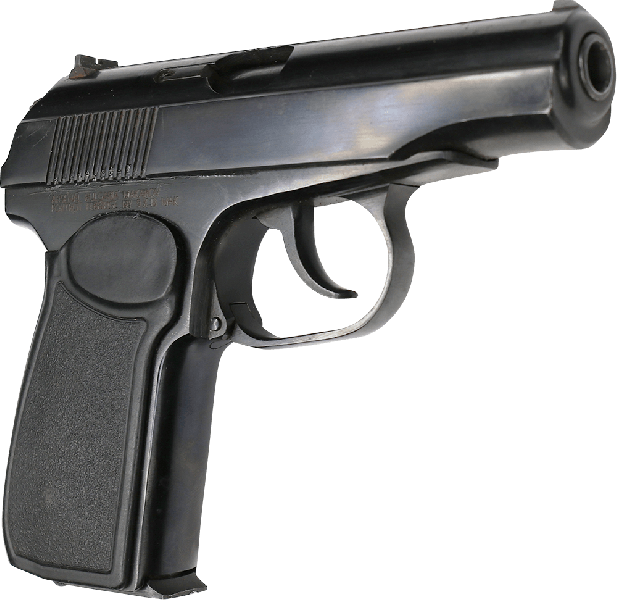
The Makarov uses a simple blowback system with no mechanical locking or delaying mechanisms. Slide mass and recoil spring strength keep the breech closed until pressures drop to a safe level, contributing to mechanical simplicity and reliability. The pistol has a fixed, pinned barrel with an annular recoil spring around it, offering potential accuracy advantages over tilting-barrel Browning-type actions. Sights include a front blade milled into the slide and a dovetailed rear sight with limited windage adjustment, providing a clear, square sight picture. The pistol operates in double-action/single-action, with a relatively heavy double-action pull and a lighter, though not especially light, single-action pull. It features a rebounding hammer and a safety that both decocks the hammer and blocks it from striking the free-floating firing pin, a system that passed California drop tests and is regarded as safe in practice.
Attention turns to the specific surplus examples on hand, which are in notably good condition for their age. Finish wear is mostly limited to the slide, consistent with prior police or military service. These pistols are Bulgarian-made by Arsenal rather than Russian-produced, identifiable by the small “Circle 10” marking above the grip. Some were manufactured for police and law enforcement, while others were produced for the civilian market, often marked with Arsenal branding instead of government markings. The pistols retain a slide release, a feature not always present on surplus designs from the same era. Overall, they are presented as historically interesting sidearms that still look clean and well-maintained, suitable for collectors who want a service-style Makarov with clear Eastern European provenance.
The scene shifts to the range, where two shooters evaluate how the Bulgarian Makarov in 9x18 performs. They reference prior experience with 9x18 ammunition in the PM-63, noting that it was soft shooting in that platform and wondering if the same feel will carry over. Handling impressions highlight the pistol’s ergonomics, including a noticeable palm swell that feels comfortable in the hand and a slick, well-preserved finish. Once shooting begins, the sights, though basic and fixed, allow for consistent hits on target. The shooters focus less on speed and more on getting a feel for how the surplus Makarov behaves under live fire, setting up later observations about recoil, ejection, and control layout.
While shooting, the Makarov shows a very consistent ejection pattern, throwing brass roughly 20 to 25 feet in a uniform direction. The shooters contrast this with some modern pistols that exhibit erratic ejection, suggesting the Makarov is well tuned despite its age. Ergonomically, the pistol feels solid and comfortable, with controls that differ from contemporary designs. The magazine release is located at the heel of the grip rather than behind the trigger guard, requiring a different reload technique. The hammer can be cocked manually or by cycling the slide. These details reinforce that the Makarov is a product of its era, but still practical once the shooter adapts to its control layout and surplus-style fixed sights.
Further shooting reveals that a very high grip on the beavertail can allow the slide to contact the shooter’s hand. In the demonstration, the slide lightly strikes the hand without injury but could potentially cause a malfunction or minor cut, so the grip is adjusted slightly lower. With that change, the pistol runs without issue. Recoil from the 9x18 cartridge is described as very manageable, aligning with expectations of a soft-shooting surplus sidearm. The double-action/single-action trigger has noticeable travel and feels somewhat heavy, estimated around 7 to 8 pounds, with a longer reset than many modern pistols. Even so, it remains workable for deliberate shooting, and the pistol reliably locks open on an empty magazine, concluding the practical evaluation.












 Loading...