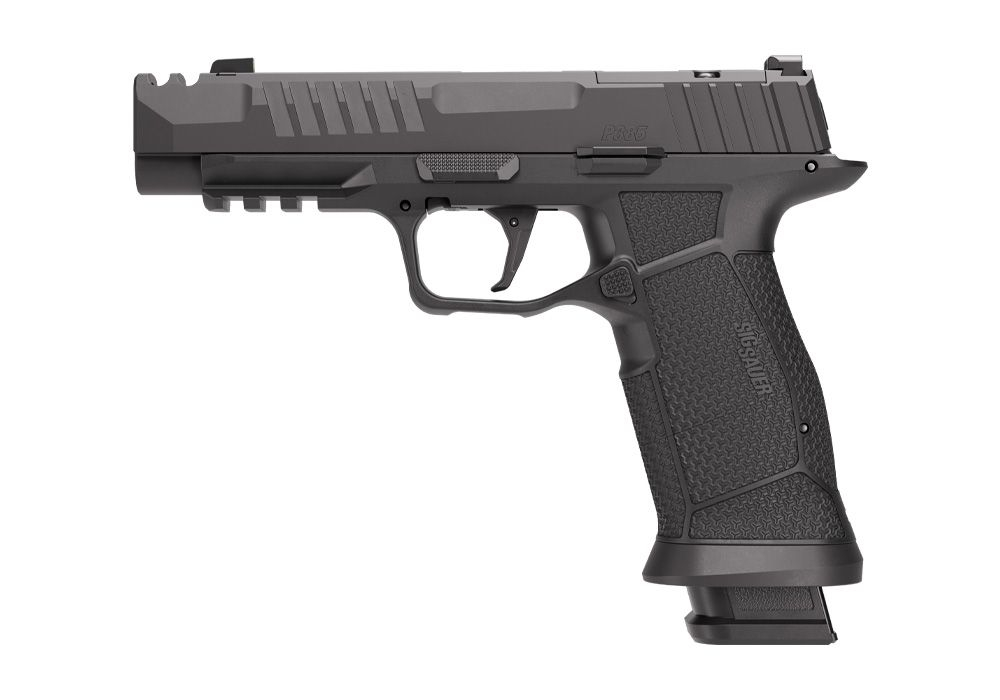
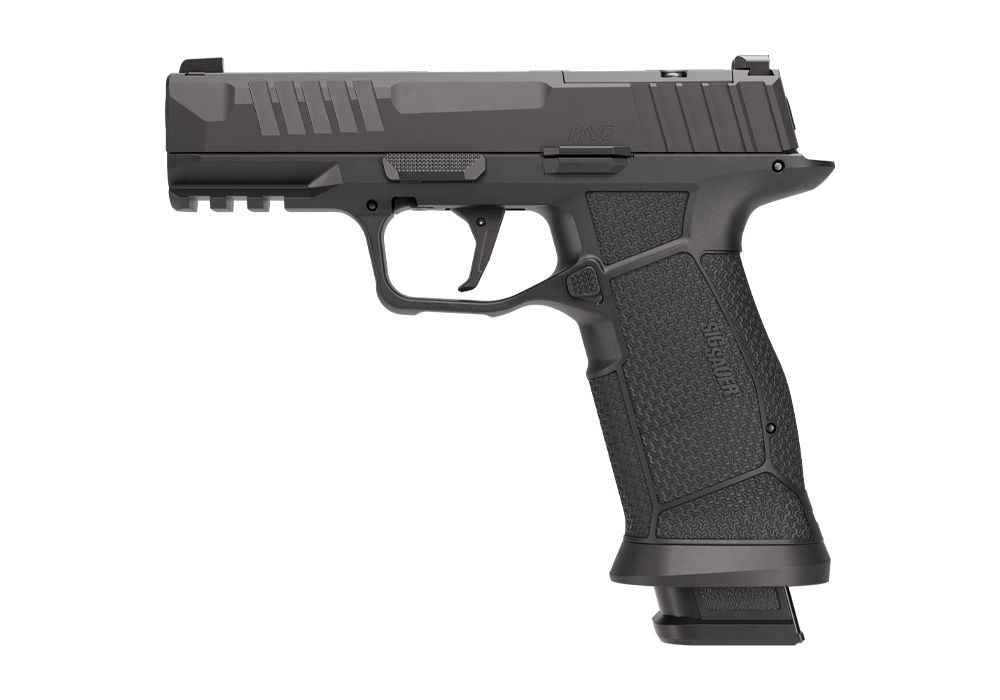
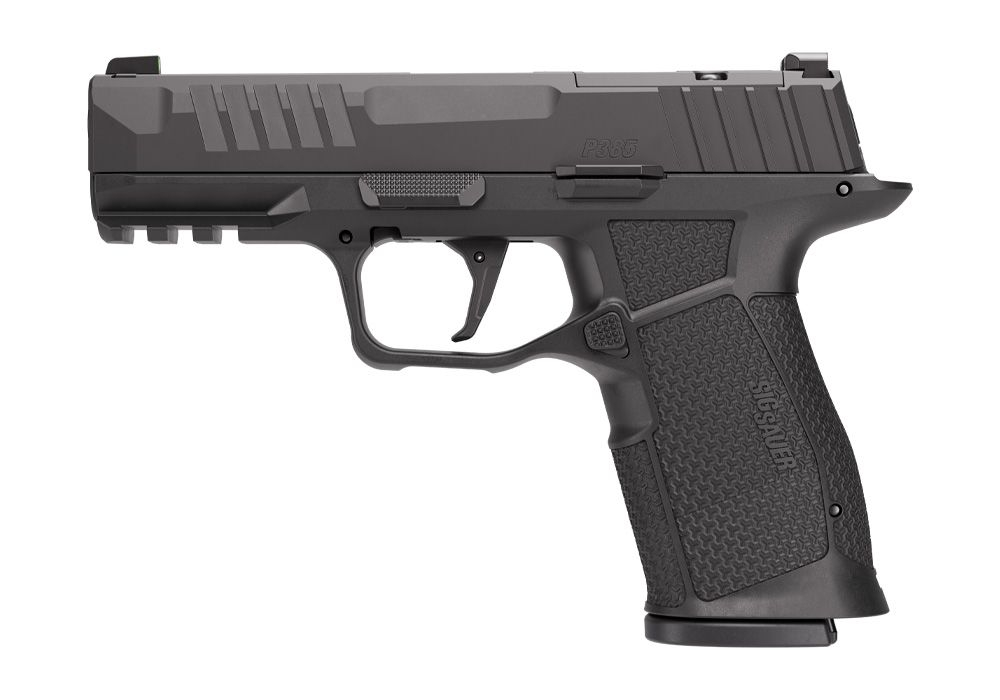
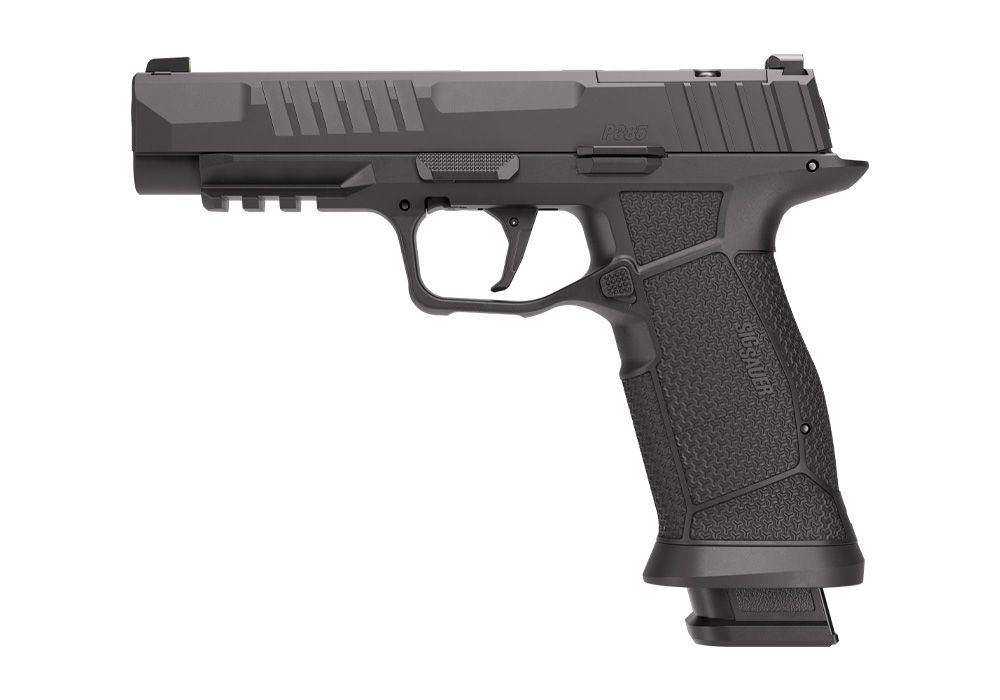
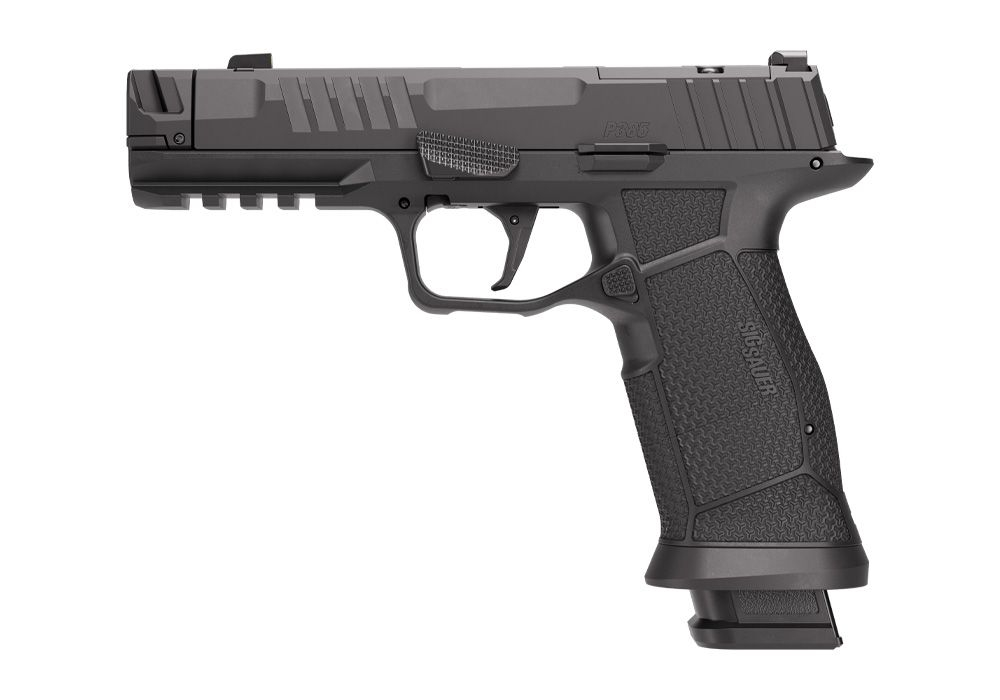
The video opens by introducing Sig Sauer’s new P385 pistol as a clean-sheet design intended to evolve beyond the P320 while still using proven P320 magazines. Sig gathered wish lists from internal staff, law enforcement officers, federal agencies, and military units, then built the P385 around those demands. A very low bore axis is emphasized to reduce muzzle flip and improve control. The pistol incorporates a patented internal recoil dampening system to soften recoil impulse, and the lineup includes compensated options: an integrally compensated slide model and the P385 MACH3D with an external comp that targets vertical muzzle rise. Ergonomics and modularity are central. A magstrap system lets shooters change both grip size and grip length, enabling setups like a 17-round flush configuration for duty or a 15-round flush for more concealability. The platform uses the common P320 AXG magwell for aftermarket compatibility and blends popular traits from the P320 and P365, positioning the P385 as a highly configurable, duty-ready family of pistols.
The discussion shifts to the P385’s internals and intended users. Sig explains that the pistol uses a completely new, ground-up fire control unit that is not backward compatible with previous FCUs. This new FCU incorporates updated safety and trigger-block features tailored to modern duty requirements. The P385 is described as being developed with heavy input from law enforcement, federal agencies, and military units that wanted a next-generation sidearm while the P320 remains fully supported. Because the pistol is an all-new design, holster compatibility was a major focus. Sig worked closely with leading holster manufacturers from the outset and standardized around an extended takedown lever that also doubles as an ergonomic thumb rest. This ensures that level 1, level 2, and level 3 duty holsters will be widely available at launch, addressing a common concern for agencies considering a platform change.
Attention turns to when shooters can actually get the P385 and what it will cost. Sig states that the first production guns should begin shipping within about two weeks of the video, aiming to get them into customers’ hands quickly. Non-compensated P385 models are expected to have a street price around $599, while compensated versions range roughly from $750 to $899, covering both the integrally compensated slide variant and the P385 MACH3D with its dedicated compensator. The video then details the new reactive grip texture. Instead of aggressive, sharp checkering, the texture is inset into the grip module. Under light contact it feels relatively smooth and comfortable for all-day duty or in-vehicle carry, but when the shooter applies firm pressure, the pattern locks the hand in place. This design seeks to balance comfort with secure traction, especially under recoil or when hands are wet or sweaty.
The final section focuses on the trigger system and closing thoughts. The P385 uses a flush trigger safety blade rather than a protruding tab, so the face of the trigger feels more like a single, continuous surface. This design keeps a similar mechanical safety function while eliminating the extra sensation of pulling through a separate blade, effectively simplifying the perceived stages of the trigger pull. Sig reiterates its goal of getting the first batch of production P385 pistols to customers as soon as possible following the announcement. The video closes with early range impressions, noting that the combination of low bore axis, internal recoil dampening, and the reactive grip texture makes the pistol controllable and comfortable to shoot. The presenters express confidence that the P385 family, including Comp, Carry, Compact, Full Size, and MACH3D variants, will appeal strongly to both professional users and civilian shooters.





















 Loading...