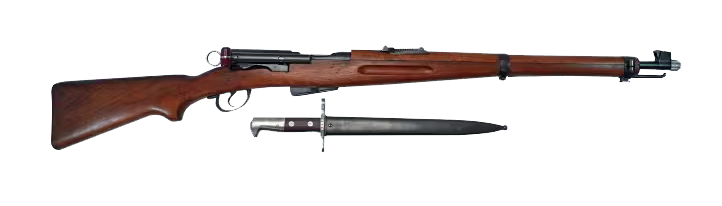
The video introduces the Swiss K1911 straight-pull carbine rifle, a surplus firearm with roots in late 19th-century Swiss design. Production began in 1891, and the rifle served in various forms until 1958. The featured carbine has a 23.3-inch barrel and is chambered in 7.5x55, giving it a compact profile while retaining substantial ballistic performance. The K1911 became a favored rifle of the Swiss Army and played an important role in the development of its successor, the K31. The presentation focuses on what this surplus K1911 offers today as a historical straight-pull carbine in 7.5x55, emphasizing its place in Swiss military small arms evolution.
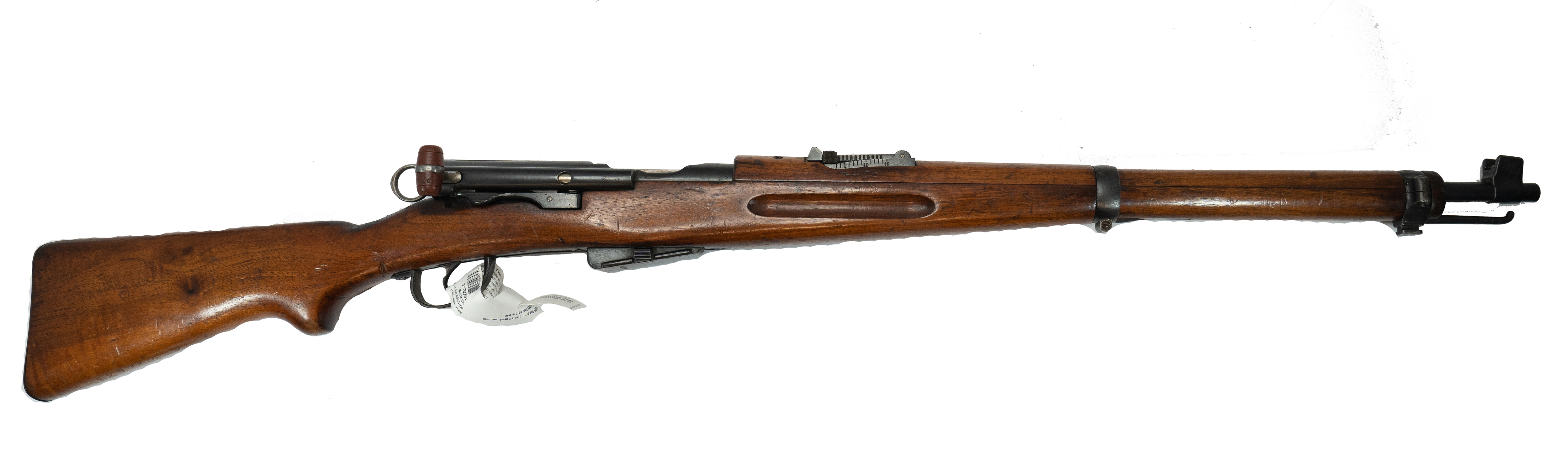
Attention turns to the specific surplus K1911 carbine on the table, described as being in good to very good condition. The rifle shows expected wear and tear from age and service, but its mechanical function remains notably smooth. Operation of the action and controls suggests that the underlying Swiss manufacturing quality has held up well over time. Despite its age, the straight-pull mechanism cycles cleanly, and the rifle feels solid in hand. The discussion frames this example as representative of surplus K1911 carbines that retain strong functional characteristics while displaying honest cosmetic wear consistent with their service history.
The front of the K1911 carbine is examined, starting at the muzzle. A fixed front sight is mounted at the end of the barrel, and this area also includes the lug where a bayonet would attach, though a bayonet is not present in the video. Moving rearward, a sling mount is located on the side, and this particular rifle includes a sling already attached, with the note that not all surplus examples will arrive with slings. The rear sight assembly is adjustable, and manipulating it highlights the precise fit and finish of the metal components. The smooth movement of the sight parts reinforces the impression of careful Swiss machining throughout the rifle.
The video then focuses on the detachable magazine of the K1911 carbine. Removing and reinserting the magazine demonstrates how smoothly it locks into and out of the rifle, again underscoring the quality of the metalwork. A distinctive feature is that the magazine release is built into the magazine body itself rather than being a separate control on the rifle. This integrated release allows the user to operate the catch directly on the magazine when removing it. The smooth engagement and audible click on insertion and removal are emphasized as characteristic of the rifle’s well-executed design and the attention to detail in Swiss surplus firearms of this pattern.
Next, the trigger and trigger guard arrangement are described. The trigger guard is rounded and forms a continuous extension of the metal that begins at the magazine well, running rearward and securing with a screw at the back. The trigger itself has a hooked, curved shape that fits closely around the shooter’s finger. When the trigger is pressed, there is a noticeable amount of take-up before reaching a distinct wall, followed by a crisp break. The pull is characterized as clean and well-defined, with a clear separation between the initial movement and the final release. This layout and feel reflect the careful design of the K1911’s fire control components.
The operation of the straight-pull bolt is demonstrated. To cycle the action, the bolt handle is pulled straight back and then pushed forward, without any rotational movement. When the magazine is empty and no cartridges are present, the bolt may require a downward push combined with forward pressure to disengage and move fully into battery. The safety mechanism is another distinctive feature. It is operated by pulling out the rear piece and twisting it into different positions, using a keyhole-like arrangement. In one position the rifle cannot fire; twisted again, it returns to a fire-ready state. This rear piece is also the firing pin assembly, so its position serves as a visual and tactile indicator of whether the rifle is ready to fire.
The video concludes with an overview from muzzle to buttstock, presenting the Swiss K1911 carbine as a classic surplus rifle option. Chambered in 7.5x55 and featuring a straight-pull action, adjustable sights, distinctive magazine release, and unique safety, it offers a combination of historical interest and mechanical refinement. The example shown falls into a sub-$700 price range, with condition described as good to very good, including typical wear but solid operation. Its design and Swiss manufacturing quality are highlighted as reasons it stands out among surplus carbines, making it a notable candidate for collectors or enthusiasts interested in early 20th-century Swiss military rifles.























 Loading...