The video opens with a brief comedic skit of the hosts whispering in the woods, joking that "the trees are speaking" and wondering if the language might be Vietnamese or American. They quickly pivot to the main topic: a Classic Firearms countdown of the top five guns of the Vietnam War. Matt and Ryan explain that they’re focusing on rifles and support weapons that defined the conflict in popular memory. They tie the episode to the officially designated start of the Vietnam conflict on November 1, 1955, noting how that date sits in a hazy gray area between the end of the French Indochina fighting, various policing actions, and the recently concluded Korean War. With that historical framing in place, they jump into the list and reveal their number five pick: the M60 machine gun.
They describe how the M60 was adopted in 1957, so it wasn’t present at the very earliest stages of the conflict but quickly became visually synonymous with Vietnam. In just about every movie, documentary, or newsreel about the war, you can spot an M60 gunner in the door of a helicopter, often in the M60D configuration. The hosts explain that the gun’s design drew heavily from two German World War II designs, combining the belt-feeding system of the MG42 with the gas operation of the FG42. Chambered in 7.62x51 NATO and configured as a beltfed squad support weapon, it was intended to replace both the Browning 1919 and the BAR at the small-unit level.
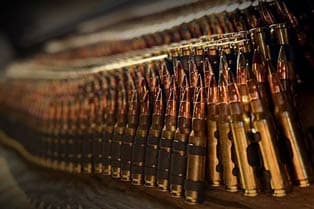
They emphasize the M60’s famous nickname, “the pig,” earned because of its substantial weight and its tendency to devour long belts of ammunition. That appetite was by design: U.S. forces needed a portable support gun that could send a large volume of fire downrange and keep running under harsh conditions. The hosts acknowledge that the original versions had their share of issues, but note that the platform was continually refined through multiple variants, eventually resulting in much more reliable and user-friendly models. Even with its quirks, the M60 became one of the most iconic support guns of the Vietnam era and a defining visual symbol of the conflict.
The discussion moves to the M1 Garand, a rifle many people mentally associate almost exclusively with World War II and the Korean War. The hosts point out that the Garand actually saw meaningful service in Vietnam as well. Even after the adoption of the M14, M1 rifles remained in circulation during the early years of the conflict and continued to appear as military aid to allied forces such as the Army of the Republic of Vietnam and South Korean units.
From there, they transition to the M14, officially adopted in 1957 and chambered in 7.62x51 (.308). Mechanically, the M14 is very close to the M1 Garand, retaining a similar gas system and overall layout, which made the manual of arms familiar to troops trained on the older rifle. The major leap forward was the move from an eight-round en-bloc clip to a detachable 20-round box magazine, paired with a slightly shorter, more modern cartridge. This change dramatically improved reload speed and flexibility in combat.
The hosts also touch on early night-fighting equipment used with the M14, including bulky infrared spotlight systems and early-generation starlight scopes. These setups often required separate, waist-mounted battery packs and added significant weight to the rifle, but they still gave U.S. troops a major advantage in low-light engagements. They mention scenarios such as targeting enemy forces crossing rivers under cover of darkness, where this technology and the M14’s power combined to create a formidable night-fighting capability.
Building on the M14 segment, the hosts emphasize how the transition from en-bloc clips to detachable magazines fundamentally changed the average soldier’s experience. For troops already familiar with the Garand, the manual of arms remained intuitive, but the ability to quickly swap 20-round magazines instead of loading individual clips represented a major improvement in sustained fire and combat efficiency.
The countdown then advances to the number three rifle: the FN FAL and its Australian SLR variant, which saw combat with Australian and New Zealand forces in Vietnam. Designed by FN in Belgium, the FAL was a leading contender to become the U.S. service rifle in the 1950s, competing in trials against the T44 (which became the M14) and the AR10. Although the M14 ultimately won the U.S. trials, the FAL went on to be widely adopted across NATO and many other countries, earning the nickname “the right arm of the Free World.”
The hosts explain that the Australian SLR was an inch-pattern FAL adopted in the mid-1950s. In Vietnam, these rifles typically appeared with solid wood or early black synthetic furniture, rather than the modern skeletonized stocks and accessories often seen on contemporary civilian builds. That period-correct configuration—full-length barrel, fixed stock, and classic handguards—helps cement the FAL/SLR’s image as a quintessential Cold War battle rifle and a distinctive presence on the battlefields of Southeast Asia.
The hosts compare the FAL’s configuration—7.62x51 chambering, 20-round detachable magazine, and full-power battle rifle role—to the M14, noting how similar they look on paper yet how different their service histories turned out to be. While the M14’s tenure as the primary U.S. service rifle was relatively short, beginning around 1957 and quickly overshadowed by the M16, FAL-type rifles remained in front-line service with Australian forces from the mid-1950s until they were replaced by the Steyr AUG in the late 1980s. This long service life, combined with widespread international adoption, solidified the FAL as an icon of the 1960s and 1970s and a true peer to the M14 in the era’s battle rifle landscape.
They then zoom out to the broader geopolitical context, framing Vietnam as a major Cold War proxy conflict. Western-aligned nations backed South Vietnam, while communist-aligned states supported the North. The Soviet Union and Warsaw Pact countries such as Romania and Poland supplied AK-pattern rifles and other equipment to North Vietnamese forces, while U.S. allies including South Korea, Australia, New Zealand, and Thailand contributed troops, training, and materiel to the southern side. This clash of alliances is reflected in the small arms seen on both sides of the conflict.
The video explains that North Vietnamese forces were not a single, uniform entity. On one hand there was the regular North Vietnamese Army (NVA), which was more standardized and better equipped. On the other, there were Viet Cong guerrillas, who often relied on a patchwork of whatever weapons they could obtain. Viet Cong fighters used SKS carbines, French MAS-36 rifles, MAT-49-style compact automatic guns, captured German K98 Mausers, and even older sidearms like the M1895 Nagant revolver. In many cases, they fielded any serviceable firearm that could be sourced through supply lines, capture, or clandestine channels.
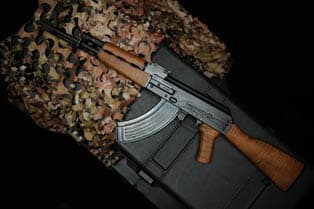
Against this varied backdrop, the AKM emerged as the primary rifle of North Vietnamese regular forces and a key symbol of the communist side. Evolving from the original late-1940s pattern, the AKM standardized a stamped receiver in place of earlier milled versions, retained the 7.62x39 cartridge, and used a 30-round detachable magazine with a long-stroke gas piston system. The hosts highlight its status as one of the most produced rifles in history and emphasize how its rugged reliability, ease of use, and tolerance for harsh conditions made it ideally suited to jungle warfare. These characteristics, combined with massive external support, ensured that the AKM became the dominant long gun in enemy hands throughout the Vietnam War.
The hosts describe how U.S. special operations units and other clandestine elements sometimes employed captured AK-pattern rifles and other 7.62x39 weapons during missions behind enemy lines. Using the same type of rifle as opposing forces helped them blend in acoustically, since the sound signature of those guns would not immediately betray an American presence. It also meant that distinctive U.S. cartridge cases were less likely to be found at contact sites, which could help obscure who had been operating in a given area.
Before revealing their top rifle, they introduce several honorable mentions. The 1911 pistol, chambered in .45 ACP with a seven-round magazine and designed by John Moses Browning, is praised for its long service life and legendary status among American service members. The hosts note that carrying dual 1911s was a real, if somewhat heavy, loadout choice for some personnel in Vietnam.
They then highlight the SKS as a classic semi-automatic carbine strongly associated with Viet Cong fighters and other communist-aligned forces. Its fixed 10-round magazine, loaded via stripper clips, and its intermediate cartridge made it a practical and durable weapon in the early and mid stages of the conflict.
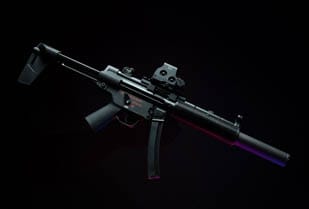
Finally, they discuss the Swedish K, a compact 9mm automatic gun that earned a strong reputation among American troops who encountered or used it. It was admired for its exceptional reliability, controllable handling, and influence on later pistol-caliber designs. Although it did not make the formal top five list, the Swedish K stands out as a noteworthy and well-regarded firearm of the Vietnam era.
The countdown culminates with the number one gun of the Vietnam War: the M16 family. The hosts acknowledge that the M16’s reputation is complicated, shaped by both its battlefield effectiveness and its infamous early reliability problems. They discuss the M16E1, recognizable by its early three-prong flash hider, and explain how the design evolved into the M16A1, which adopted the now-familiar closed flash hider to reduce snagging on vegetation and mitigate issues with debris.
They also cover Vietnam-era carbine variants grouped under the CAR-15 family, including the XM177 series. Particular attention is given to a Colt-made GAU-5A-style reproduction, representing the Air Force’s compact carbine that Colt re-released decades later. These shorter variants illustrate how the M16 platform was adapted for different roles, from standard infantry rifles to handier weapons for specialized units operating in dense jungle and close-quarters environments. The hosts stress that, despite its rocky start, the M16 ultimately became the defining U.S. rifle of the conflict and the foundation for generations of later designs.
The hosts describe how soldiers and armorers in Vietnam improvised with M16s to meet specific operational needs. Some units cut down full-length M16 barrels to create shorter rifles while retaining the rifle-length gas system, a configuration later nicknamed the “dissipator.” Shortening the barrel reduced dwell time, so armorers sometimes enlarged gas ports or added sound suppressors to increase back pressure and keep the rifles cycling reliably. Early three-position collapsible stocks on carbines were also subject to field-expedient tweaks and repairs as troops tried to tailor their weapons to the harsh conditions.
They then outline the M16’s adoption timeline, from early trials in the early 1960s to widespread M16A1 issuance by the latter half of the decade. A critical point in the story is the change in ammunition propellant. During testing, the rifle had been paired with a clean-burning ball propellant, but issued ammunition used a dirtier stick-type propellant. This switch, combined with marketing claims that the rifle was nearly “self-cleaning,” led many troops to under-maintain their weapons. The result was severe fouling, malfunctions, and tragic combat failures that cost American lives and badly damaged the M16’s early reputation.
Continuing the examination of reliability, the hosts explain how the use of the wrong propellant type in 5.56 ammunition led to excessive fouling, frequent malfunctions, and heartbreaking failures in firefights. In response, the U.S. military rushed cleaning kits, chamber brushes, and even comic book-style maintenance guides to troops in the field, trying to correct the misconception that the M16 required little or no care.
Despite this rocky start, the rifle offered clear advantages over the M14. It was significantly lighter, and its smaller 20-round magazines allowed soldiers to carry more ammunition into the jungle without an excessive weight penalty. Early doctrine even flirted with treating magazines as semi-disposable items, though that idea proved impractical in the field. The M16’s low recoil and more controllable automatic fire contrasted sharply with the M14’s stout recoil, which often required a metal shoulder brace to help keep the rifle from climbing during bursts. These characteristics helped cement the M16 as a more suitable general-issue rifle for the close, fast-paced engagements typical of Vietnam.
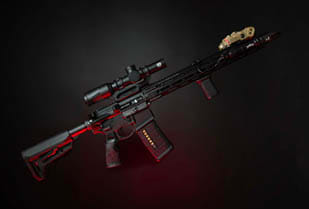
The video highlights the M16 platform’s remarkable service life, from its early 1960s introduction through decades of continuous adaptation and improvement. Even as newer rifles like the M7 and other modern platforms enter service, the fundamental concepts behind the M16 continue to influence contemporary small arms design. The hosts reference current U.S. military efforts, including modern carbine programs that aim to match or exceed the muzzle velocity of Vietnam-era 20-inch 5.56 rifles while using shorter barrels.
Advances in metallurgy, improved manufacturing, and higher-pressure ammunition are key to achieving this balance of compactness and performance. The hosts note that debates over optimal calibers, barrel lengths, and velocity are not new; they are rooted in lessons learned from Vietnam and earlier conflicts. The M16’s evolution from controversial newcomer to enduring benchmark shows how battlefield experience, soldier feedback, and technological progress drive ongoing refinement in infantry weapons.
As the video wraps up, the hosts reaffirm the M16 as their number one Vietnam War gun and dive into personal preferences regarding ergonomics among its variants. They compare the slim, smooth M16A1 pistol grip to the later A2 grip, with some favoring the earlier design and the clean look of slab-sided lower receivers. The Colt SP1 is mentioned as another iconic civilian variant that visually echoes early service rifles and remains highly recognizable among enthusiasts.
They invite viewers—especially Vietnam veterans—to share their own experiences, favorite firearms, and disagreements with the ranking in the comments, encouraging a respectful and informative discussion. The hosts then briefly spotlight the American 180, a .22 LR automatic firearm with a high-capacity drum, noting its niche use in roles such as disabling vehicle wheels and other light targets. Its extremely high rate of fire is described as sending out a stream of .22 rounds that sounds like a swarm of angry bees, adding an unusual but memorable footnote to the broader story of Vietnam-era weaponry and the diverse range of arms that appeared during the conflict.













 Loading...