Intro, Training Context, and Tech10 Sling Problem Statement
The video opens at Take Game Training and Range with cooler weather on the line and a focus on practical rifle work rather than merch. The hosts immediately frame the lesson around how to properly set up and run a rifle sling, including strong-side to weak-side transitions and converting a two-point sling into a single-point configuration. They introduce Paul from Tech10, noting that all rifles are cleared and one is an SBR, then dive into a common problem: B5 and LMT government stocks lack built-in QD sockets. Paul explains that Tech10’s QD insert has already seen use on rifles like the Mk18, M4A1, Mk12, and various Daniel Defense platforms, originally discovered through Neil McLean and the McLean Core Sling. Drawing on 14 years as an NSW gunner’s mate, Paul describes sling frustrations during room entries, barricade shooting, and vehicle work, which drove him to design a QD insert that fits the stock’s rear cavity and 3/16-inch through-hole and can be installed quickly with simple tools.
QD Insert and Swing Mount Installation on B5/LMT Stocks
The instructors walk through installing the Tech10 sling mount insert into the B5/LMT stock. The insert is secured with a 316 passivated stainless steel pin that passes through the stock’s 3/16-inch hole and the insert body. They emphasize that the pin should sit flush on both sides and can be driven in with a basic hammer in under two minutes, making the upgrade accessible without specialized armorers’ tools. Once the insert is in place, they introduce the two-piece swing sling mount that interfaces with it. This mount is machined from 3/8-inch thick solid steel and is designed to pivot, giving the sling freedom to move as the shooter transitions shoulders. The hosts contrast this with mounting behind the castle nut or using HK hooks, which can bind or dig into the shooter. Durability and retention are stressed: the system is intended to be extremely robust, and removal requires driving the pin back out with a hammer, preventing accidental disassembly under hard use.
Swing Mount Function and Front Sling Stop Design
With the hardware installed, the video demonstrates how the swing mount improves rifle handling. As the shooter moves from strong-side to support-side around barricades, the pivoting mount allows the sling to rotate naturally instead of twisting or binding against the stock. This makes shoulder-to-shoulder transitions smoother and more comfortable, especially in confined spaces or when working around cover. The instructors then introduce the Tech10 sling itself, focusing on the front stop that works with the shooter’s support hand. This stop is positioned so that when the shooter pulls the sling toward the gun, it tightens and locks the rifle into the shoulder, creating a more stable shooting platform for precision or supported fire. The front stop also prevents the sling from over-traveling or wrapping around the front QD, which can cause tangles and slow adjustments. Reinforced stitching, including double box stitches and bar tacks, is highlighted to show that the high-stress areas are built for repeated hard use.
Thumb-Loop Adjustment, Breakaway Safety, and Glove-Friendly Pull Tab
The presentation shifts to how the sling is adjusted under real conditions. The sling uses a thumb-operated loop that the shooter hooks with the thumb to pull and adjust tension, giving better leverage and control when hands are cold or dexterity is reduced. This design is intended to be intuitive under stress and when wearing gloves. A key safety feature is the built-in breakaway connection: the main link is engineered to fail at around 180 pounds, allowing the shooter to escape entanglement in emergencies. For users who want a weaker sacrificial point, optional zip ties can be added that break at roughly 60 pounds. The pull tab assembly itself is removable if a simpler profile is desired, and Tech10 offers different cable lengths to create a larger loop for use with insulated gloves. Despite being removable, the assembly is easy to reinstall through a 3/16-inch hole, maintaining compatibility with the stock insert and keeping field maintenance straightforward.
Webbing Strength, Rear Swivel Design, and Single-Point Conversion
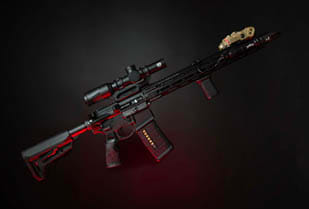
The sling’s pull tab loop is sized similarly to 550 cord, allowing paracord to be substituted in the field if the original loop is damaged. The pull tab uses 1.5-inch webbing with a hard plastic insert, making it easy to locate and manipulate by feel, even with bulky winter gloves. The main sling webbing is rated to a minimum of 4,500 pounds; the team notes they have previously used it to tow two trucks as a demonstration. It is impregnated with resin to increase abrasion resistance. The rear sling swivel is engineered so that when the rifle is dropped and the sling goes tight, the mount is driven upward and inward, helping prevent the gun from detaching. Its face-to-face interface keeps stress off the QD ball bearings and forms a mostly sealed system against dirt and debris. The hosts show how a QD point near the stock lets the shooter move the forward attachment rearward, effectively converting the setup into a single-point sling when desired, and demonstrate mounting options on rifles like the Daniel Defense DDM4 V7 and a Mk12 with integrated and add-on QD sockets.
QD Placement, Sling Construction Details, and Giveaway Close
The final section focuses on practical QD placement and construction details. On a Mk12-style distance rifle, the sling is attached at the stock and handguard to keep the rifle tight into the shoulder for a stable, repeatable shooting position, yet it can be quickly loosened for movement or extended engagements. The sling is sewn with Tenara thread, which resists UV, saltwater, and harsh chemicals, and the design uses only one internal, protected stitching point to minimize snagging and abrasion. The adjustment buckle is made from 316 stainless steel with a DLC (diamond-like carbon) coating for durability and a low-profile appearance. Mounting the sling behind the support hand prevents irritation, avoids interference with the selector, and supports rapid transitions between strong and weak shoulders for tasks like room clearing. The video closes by directing viewers to ClassicFirearms.com to see the current firearm giveaway, mentioning potential prizes such as HK416/MR556 variants, Barrett .50 cals, SCARs, MP5s, and other dream guns, and ends with thanks and an invitation to return.


















 Loading...