Intro and AR-15 vs AK Pistol Setup
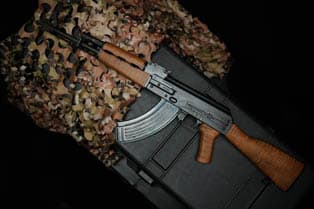
Clint and Matt from Classic Firearms open by framing the classic 7.62x39 “communist” cartridge against the more modern 6.5 Grendel. They acknowledge how popular and fun 7.62x39 is, especially in AK platforms, then pivot to why 6.5 Grendel has become Matt’s favorite AR-15 caliber over 5.56/.223 and 7.62x39. The discussion highlights how 6.5 Grendel in an AR-15 mirrors what 6.5 Creedmoor does in an AR-10: a higher ballistic coefficient projectile, more powder, and higher velocity, while keeping recoil similar to 5.56 and clearly softer than 7.62x39. On the range, they compare a 7.62x39 AK pistol, referred to as a Vishka pistol, with a 6.5 Grendel AR pistol. Both are described as easy and fun to shoot, and despite the different operating systems, the shooters note that the overall recoil impulse between the two pistols feels surprisingly similar.
Recoil, Muzzle Devices, and First Ballistic Comparisons
The hosts focus on how the 6.5 Grendel AR pistol and 7.62x39 AK pistol feel under recoil. They explain that the AR’s direct impingement system and the AK’s long-stroke gas system behave differently, yet the shooters experience very similar recoil impulses. A key factor is muzzle devices: the 6.5 Grendel pistol wears a brake that tames recoil but produces bright fireballs from the short barrel, while the 7.62x39 pistol lacks a muzzle device, affecting both recoil feel and flash. They then transition into ballistic differences. Commercial 7.62x39 is typically 122–124 grains, whereas 6.5 Grendel offers a broader range from about 90 to 130 grains. The Grendel’s thinner, longer bullets carry a higher ballistic coefficient, resist wind better, and hold energy farther downrange. When comparing similar bullet weights around 120–122 grains, they cite roughly 2600 fps for 6.5 Grendel versus about 2300 fps for 7.62x39, yielding an extra 100–200 foot-pounds of energy.
Velocity, Energy, and Modern 6.5 Grendel Design
Building on the velocity and energy comparison, the video contrasts the late-1940s origins of 7.62x39 with the modern engineering behind 6.5 Grendel. The hosts credit Bill Alexander and Alexander Arms for developing 6.5 Grendel as a purpose-built, high-performance AR-15 cartridge. They trace its lineage through 6.5 PPC and .220 Russian, emphasizing how decades of ballistic research and case design improvements informed the Grendel’s shape and performance. The argument is that a cartridge created specifically for the AR-15, using contemporary knowledge, should outperform older intermediate rounds like 7.62x39. They stress that 6.5 Grendel’s design optimizes case capacity, pressure, and bullet shape to maximize velocity and retained energy without pushing recoil into uncomfortable territory. This positions 6.5 Grendel as a modern answer for shooters who want more reach and terminal performance from the AR-15 platform than 5.56 can typically provide.
Capacity, Energy Trade-offs, and Cartridge Staying Power
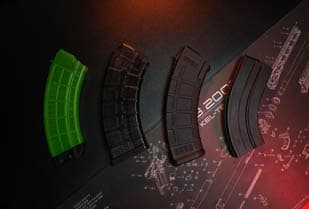
Attention shifts to the practical trade-offs of running different cartridges in the AR-15. The hosts discuss constraints like receiver size, recoil, magazine capacity, and desired energy. They use .50 Beowulf as an example of a powerful but low-capacity option, then compare a standard 30-round 5.56 magazine to a 26-round 6.5 Grendel magazine. While 6.5 Grendel reduces capacity slightly, each round carries more mass, velocity, and energy than 5.56, and offers better external ballistics than 7.62x39. They weigh these pros and cons against the long-term “staying power” of cartridges, referencing how 9mm has endured for decades as a benchmark. In their view, 6.5 Grendel brings clear advantages over both 5.56 and 7.62x39 with relatively minor downsides in capacity and recoil. This leads them to praise 6.5 Grendel as a strong all-around performer that makes smart use of the AR-15’s dimensional limits.
Recoil for New Shooters and 6.5 Grendel Use Cases
The final section addresses recoil and real-world roles. The hosts note that 7.62x39 does recoil more than 5.56, but remains manageable for experienced shooters, especially when rifle weight and gas system tuning are optimized. For newer shooters, 5.56 is still easier, yet 6.5 Grendel offers a compelling upgrade path for those wanting more performance without jumping to larger platforms like .308 or 6.5 Creedmoor. They recommend 6.5 Grendel as a versatile AR-15 caliber for long-range target shooting, varmint control, and hunting medium to larger game, particularly in regions where .223/5.56 is not legal for hunting. Configuring an AR around 6.5 Grendel allows shooters to tailor the rifle to specific roles while staying in the familiar AR-15 ecosystem. The video closes by inviting viewers to share their 6.5 Grendel experiences, like and subscribe, and support gun-related channels on YouTube to counter perceived anti-gun bias.











 Loading...